
Stack Rocks & The Green Bridge of Wales: Pembrokeshire landscape photography
The rugged coastline of south-west Pembrokeshire, in south-west Wales, provides a remarkable setting for landscape photography. Stack Rocks and the Green Bridge of Wales are among the area’s most distinctive coastal landmarks, with limestone pillars, a natural arch and open views across the Atlantic sea. Their scale, texture and changing atmosphere make this a memorable place to photograph throughout the year.
My approach to Pembrokeshire landscape photography is based on patience, observation and respect for the landscape. I return to the coast at different times of day to study how the light moves across the cliffs, rock surfaces and water. Over the years, these visits have helped me build a personal collection that reflects the character of the coastline rather than simply recording a viewpoint. I plan each session around weather, tide and access conditions so that the final image feels connected to its surroundings.

Through Tomasz Janicki photography, I share carefully considered images of these coastal landmarks. I spend time on location at sunrise and sunset when possible, watching how low light reveals the forms of the cliffs and natural arch. The collection is intended for people who want to bring a sense of the Welsh coast into their home, whether through fine art prints or a bespoke commission. For portfolio and availability enquiries, please contact me, Tomasz Janicki, on 07545156099.
Key Takeaways
- Explore Stack Rocks and the Green Bridge of Wales on the south-west Pembrokeshire coast.
- See how changing weather, tide and natural light influence each composition.
- Discover photography created with careful attention to scale, texture and sense of place.
- Learn why returning at different times of day can reveal new views of the landscape.
- Enquire about available fine art prints or personalised photographic services.
My Pembrokeshire landscape photography at Stack Rocks and The Green Bridge
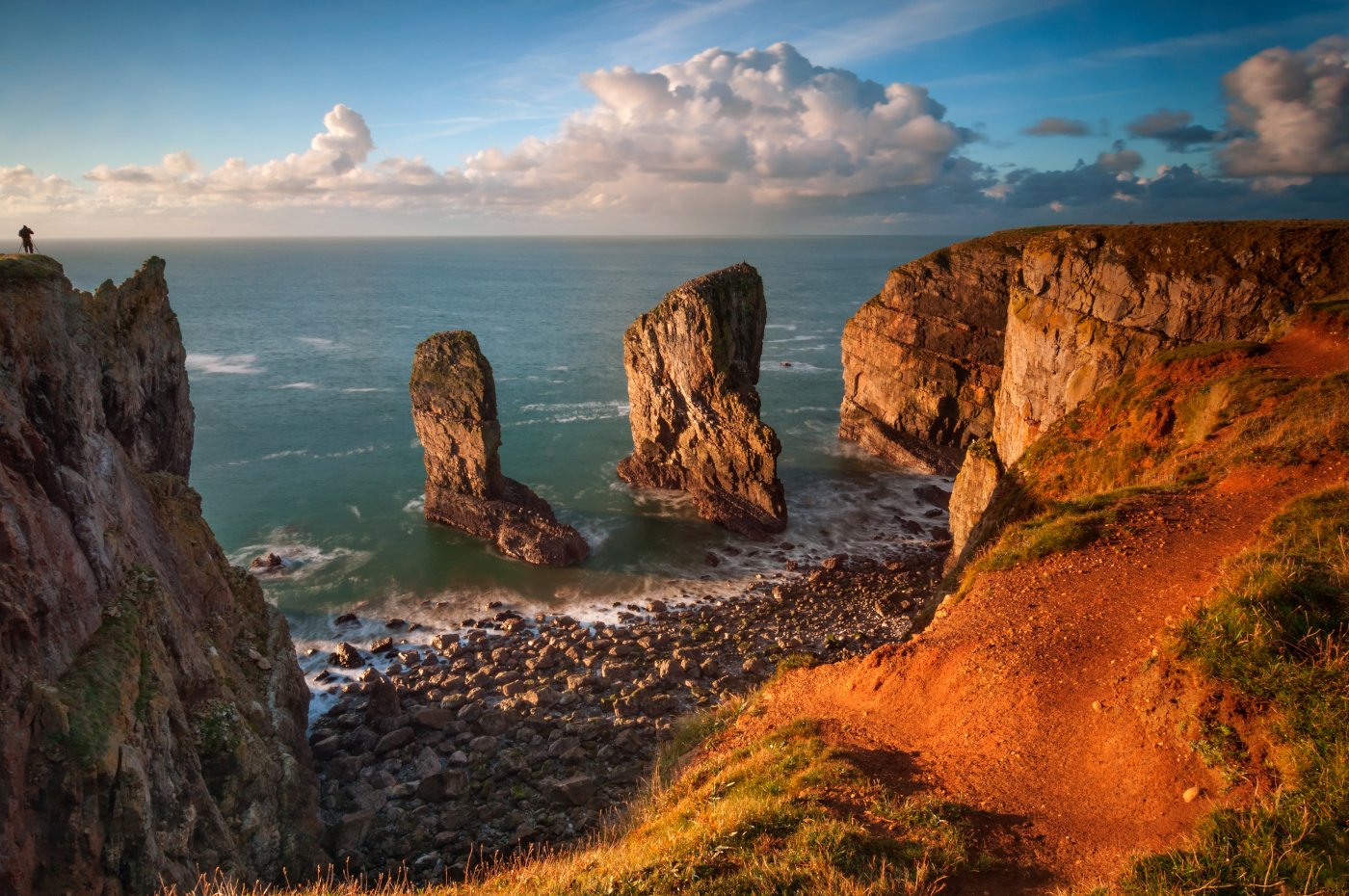
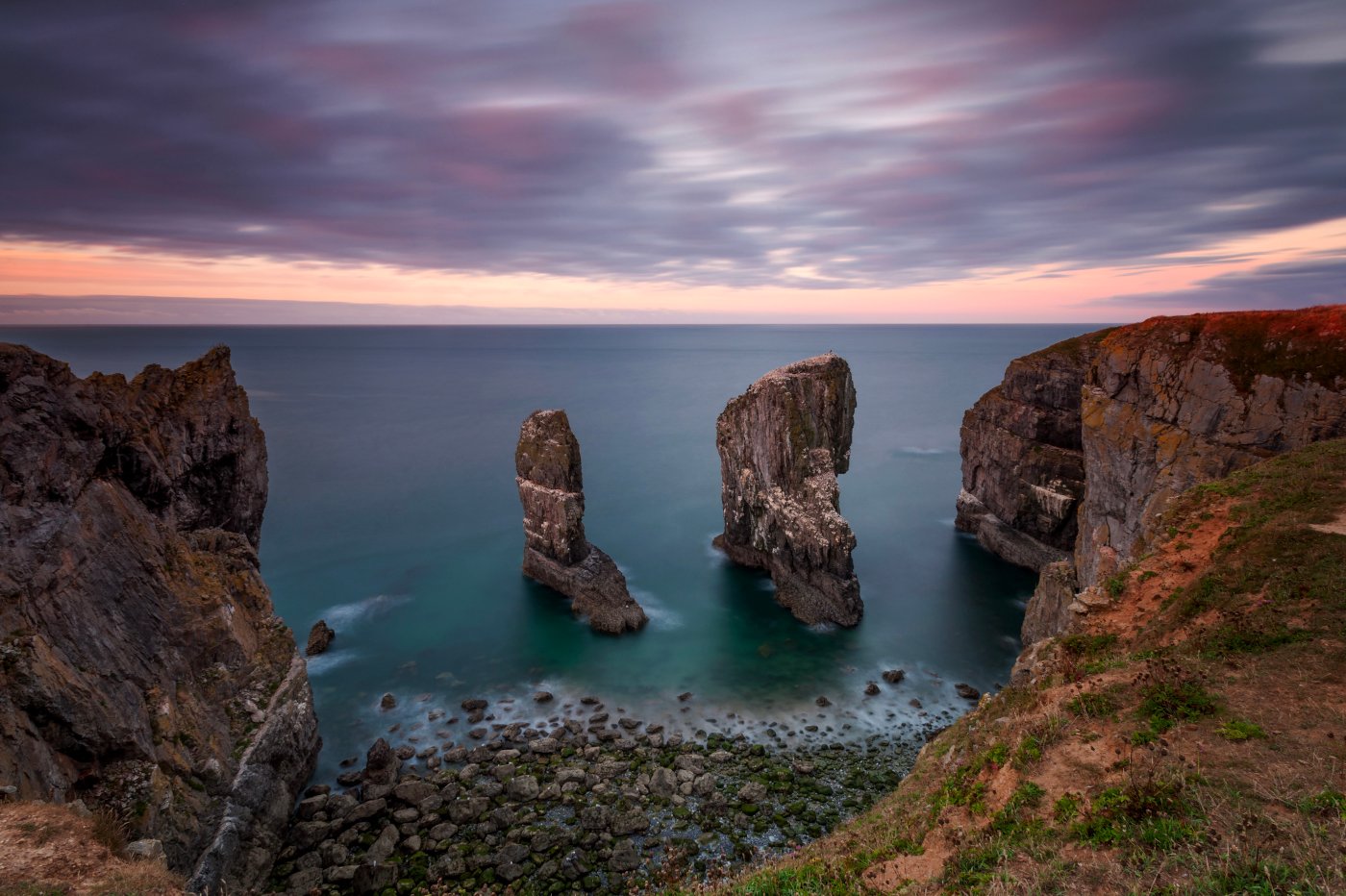
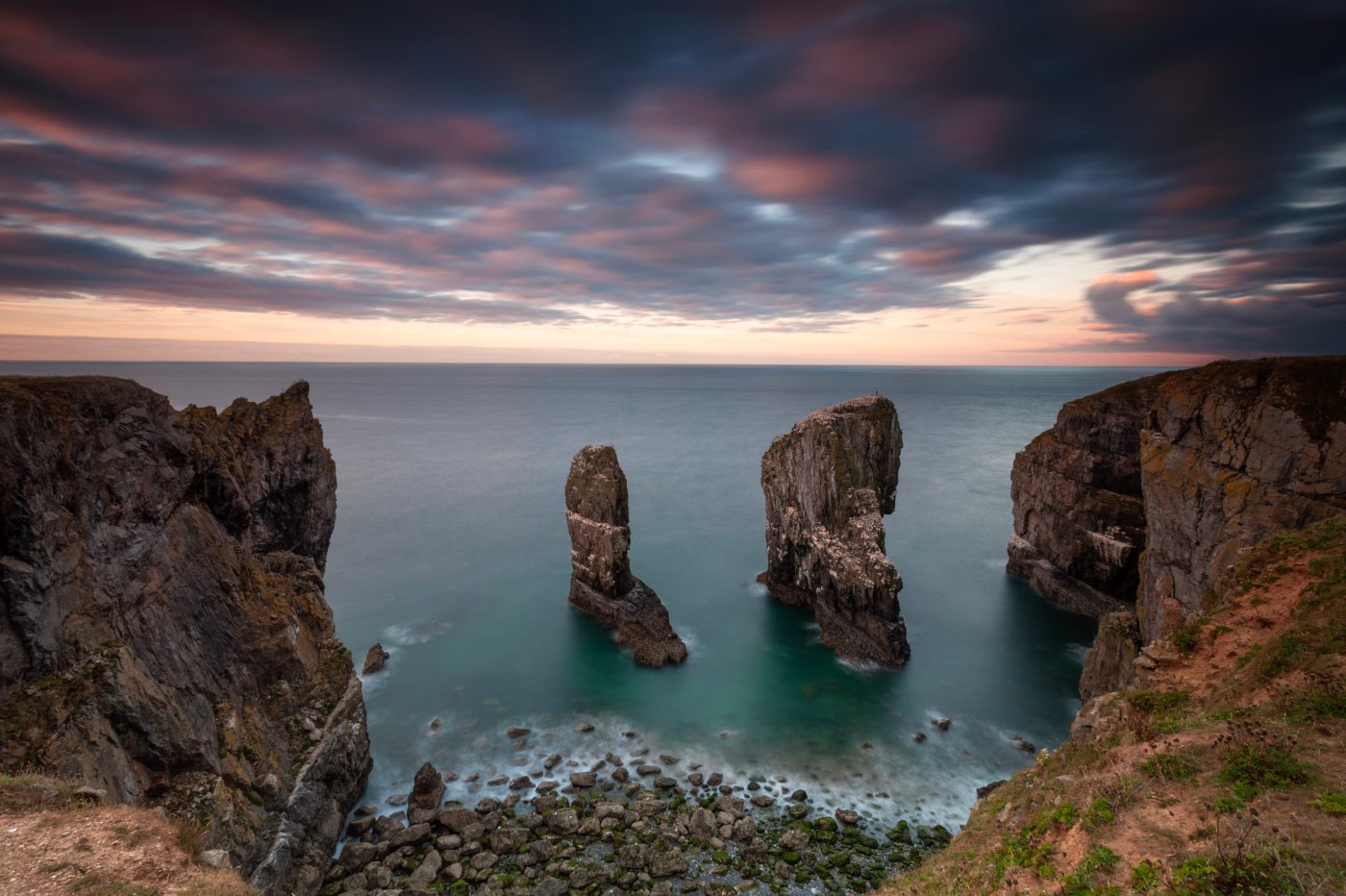
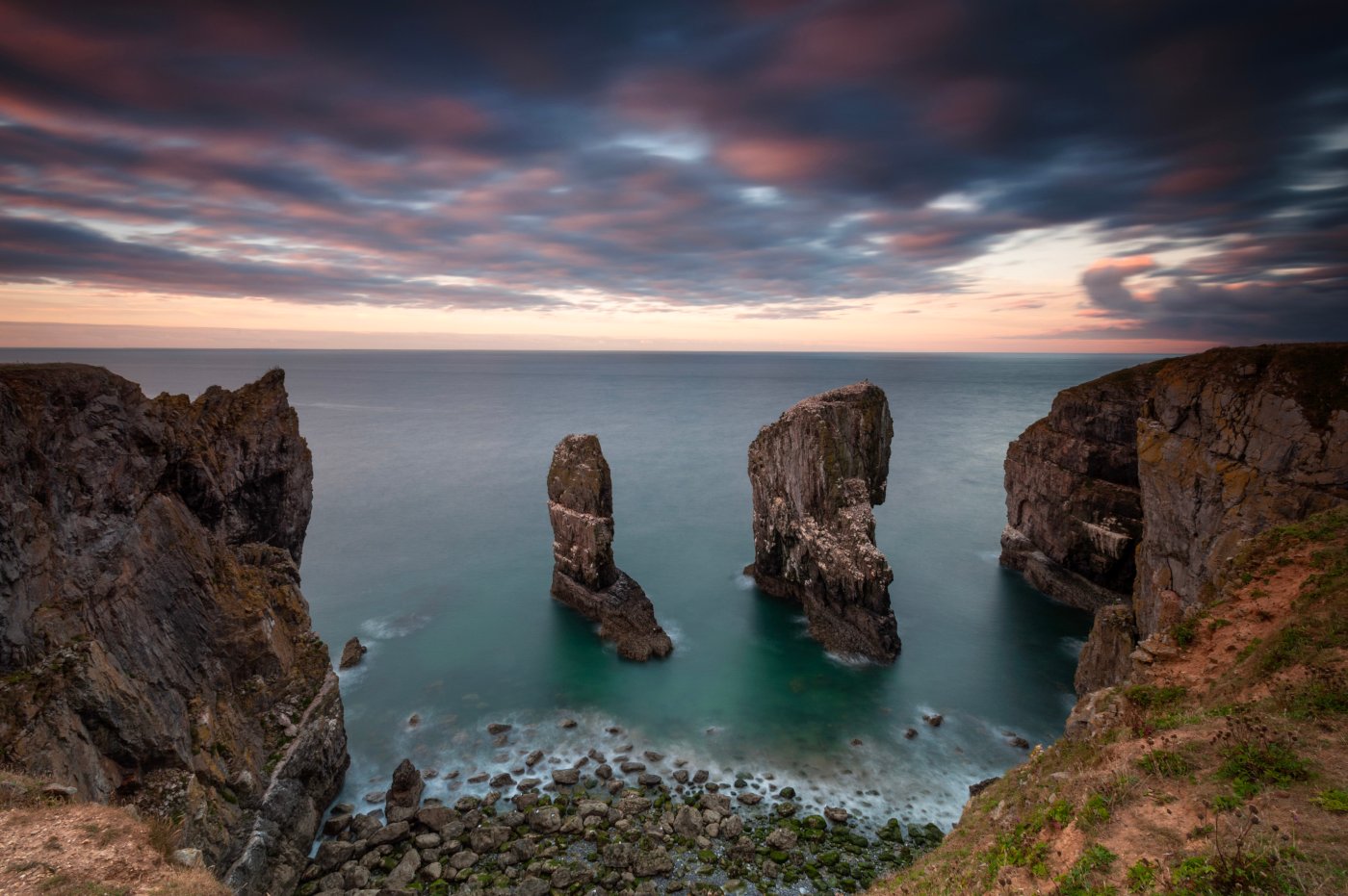
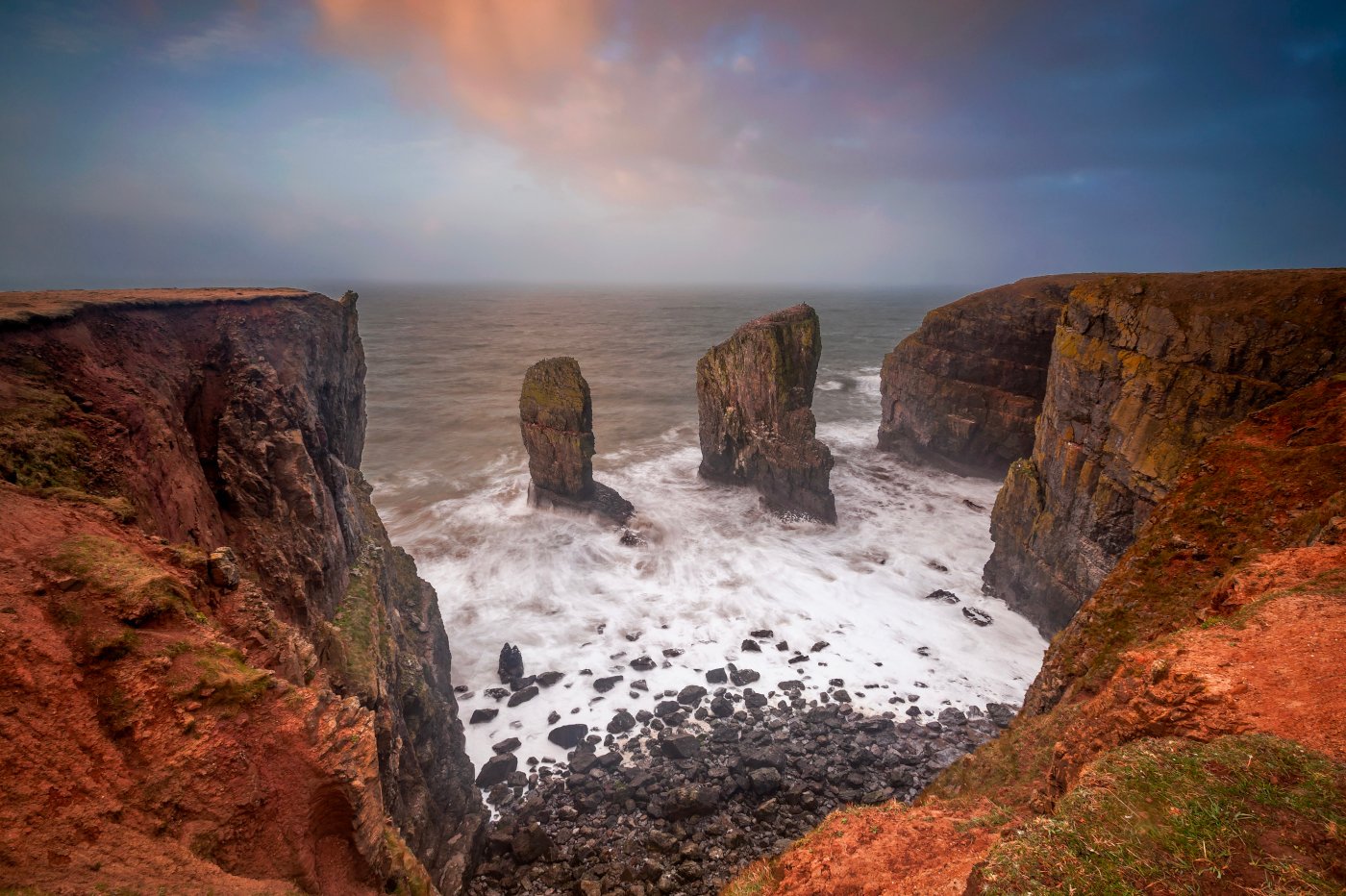
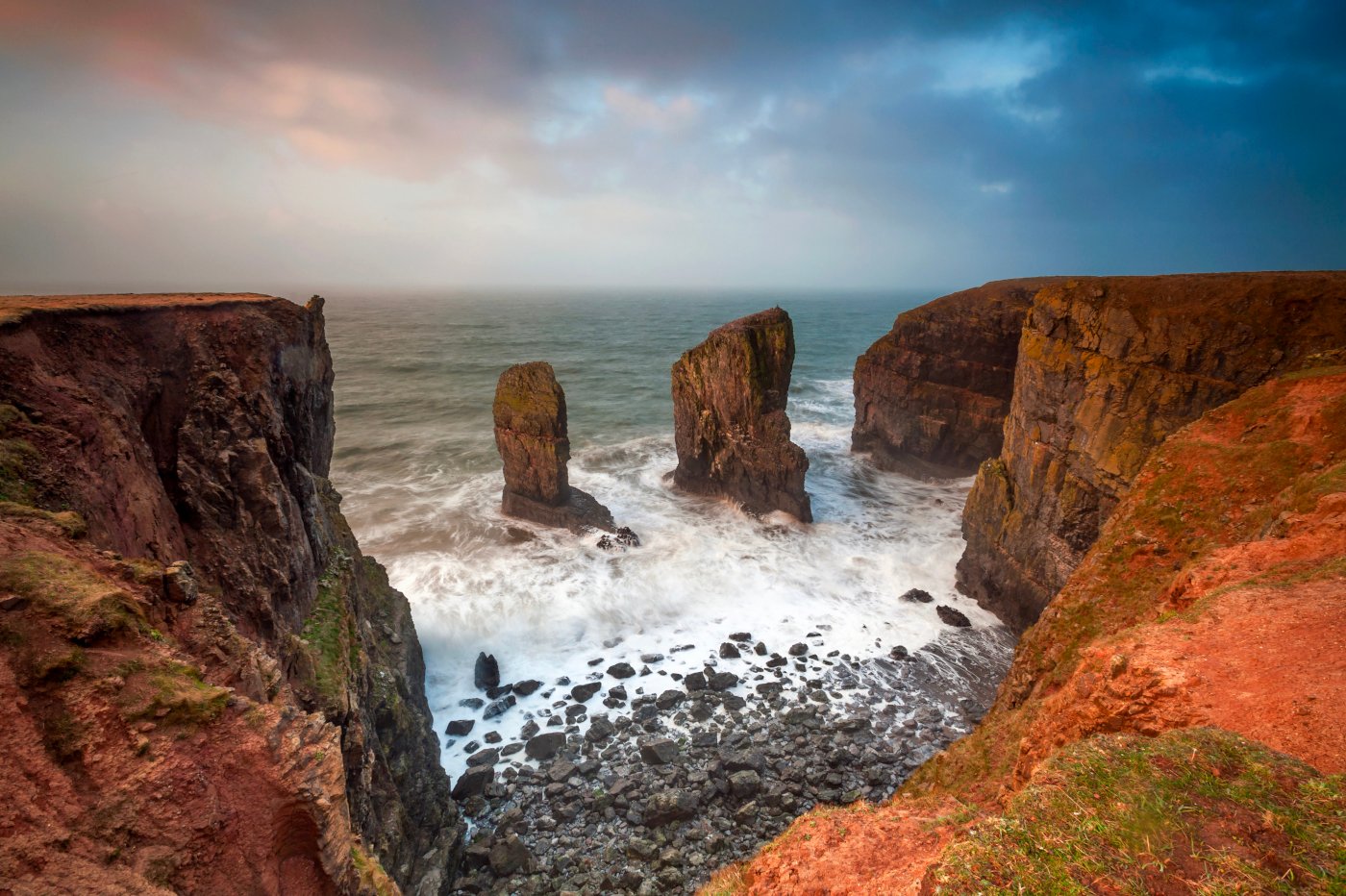
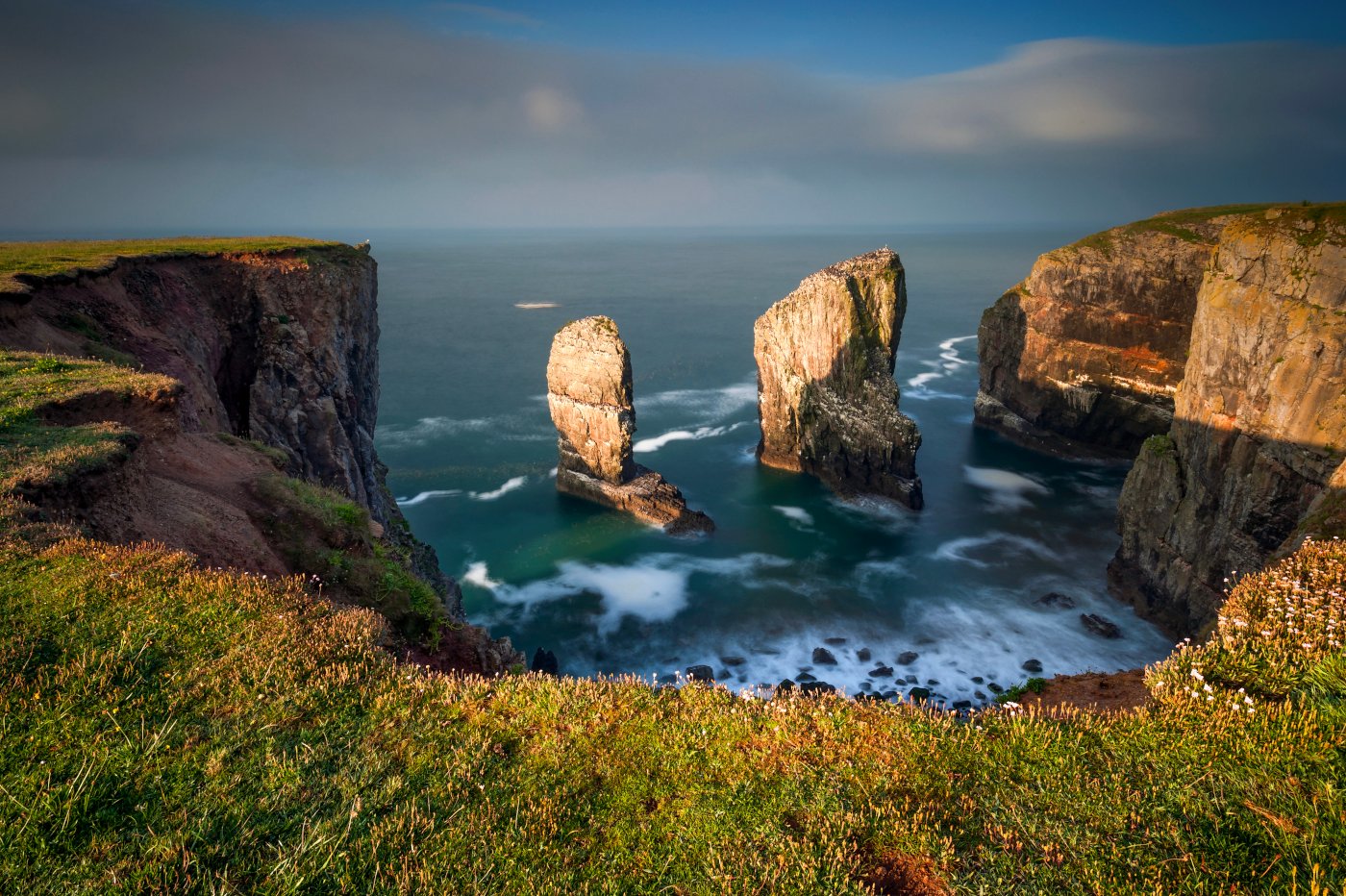
The cliffs around Stack Rocks and the Green Bridge of Wales form one of the most compelling locations for my Wales landscape photography. Situated on the Castlemartin peninsula in south-west Pembrokeshire, this exposed coast combines limestone cliffs, sea stacks, open sea and long views across the Atlantic. I have spent years walking sections of the coastal path and returning to the same area in different conditions to understand how each viewpoint changes with the weather, tide and season.
Access to this part of the Pembrokeshire Coast National Park can be affected by local restrictions, seasonal conditions and activity associated with the Castlemartin firing range. Before beginning a trip, I check current access information and follow official notices. A coastal path may look straightforward on a clear day, but wet ground, strong wind and poor visibility can change the route quickly. I do not approach unstable cliff edges or enter areas that are closed, and I recommend using recognised paths rather than taking shortcuts across open ground or towards the beach.
Why southwest Pembrokeshire scenery continues to inspire my work
The southwest Pembrokeshire scenery continues to shape my creative work because it offers a constant conversation between land, water and light. The coastal path passes through an open landscape of cliffs, low hills and grassland, with occasional views towards beaches and distant headlands. From one visit to the next, the same place can appear calm, severe, bright or almost monochromatic. That variety gives me a reason to return at different times of day rather than treating a single visit as a complete record of the coast.
I particularly value the hours around sunrise and sunset. At sunrise, cooler light can reveal the outline of the cliffs before the land takes on warmer colour. At sunset, low light can lengthen shadows across the limestone and give the sea a deeper tone. The position of the sun, cloud cover and visibility all influence the result, so neither period guarantees a particular view. I allow time to find a safe spot, observe the changing conditions and decide whether the scene works better as a wide composition or a more concentrated study.
The Atlantic also provides movement and scale. Waves breaking below the cliffs, sea spray carried by the wind and changing tide levels create details that cannot be repeated precisely. I use these elements to build a visual narrative, while keeping the composition grounded in the actual character and history of the location. A beach, rock shelf or distant headland can become an important part of the frame, even when the main subject is a natural arch or pillar.
The character of Pembrokeshire’s natural rock formations
The Pembrokeshire natural rock formations show how coastal erosion gradually shapes exposed limestone. Wind, rain, waves and chemical weathering work over very long geological periods, producing cliffs, caves, stacks and arches. The Green Bridge of Wales is a natural arch, while Stack Rocks is known for its prominent offshore pillars. These names and geological descriptions should be checked against authoritative local and geological sources, but their visible structure is unmistakable from the coastal path.
I look for the relationship between the hard, weathered rock and the softer movement of the water. Close details can show fissures, layers and textures in the limestone; a wider view can place those features within the scale of the Atlantic coast. This change in distance gives me several ways to photograph the same location. It also helps me avoid relying on a single familiar viewpoint when the tide or weather makes a particular composition unsuitable.
Safety remains part of the photographic process. Cliffs can crumble, surfaces can become slippery and waves can reach higher than expected, particularly around a rising tide. I keep well back from unprotected edges, watch the sea and never use a beach or rock platform as a shortcut without checking how quickly the water can return. Visitors should follow the marked path, respect access signs and avoid disturbing birds or vegetation. The area’s history, protected landscape and wildlife are as important as the photograph itself.
My approach to photographing the coastline with a sense of place
When I document these dramatic pembrokeshire landscapes, I prioritise observation before setting up the camera. I compare viewpoints, consider where the light is falling and look for foreground details that connect the viewer with the coast. A low angle may emphasise a rock formation, while a higher position can show the relationship between the cliffs, beach and sea. I also leave enough space around the subject for the changing sky and horizon to contribute to the image.
My planning list includes the tide forecast, wind speed, cloud cover, daylight hours and any access notices. I check whether sunrise or sunset coincides with a safe route and allow extra time for the walk along the coastal path. Conditions can change rapidly, so the best way to work is to remain flexible and return on another day when necessary. If you would like to discuss the landscape photography featured on this page or a potential commission, please contact me, Tomasz Janicki, on 07545156099.
| Factor Impact on Image Planning Priority | ||
| Tide Levels | Changes visible rock bases, water movement and beach access | High |
| Wind Speed | Influences camera stability, wave spray and personal safety | Medium |
| Cloud Cover | Controls contrast, colour and the softness of coastal light | High |
| Time of Day | Determines shadow length, direction of light and available daylight | High |
Stack Rocks photography: rock pillars, sea cliffs and Elogug Stacks
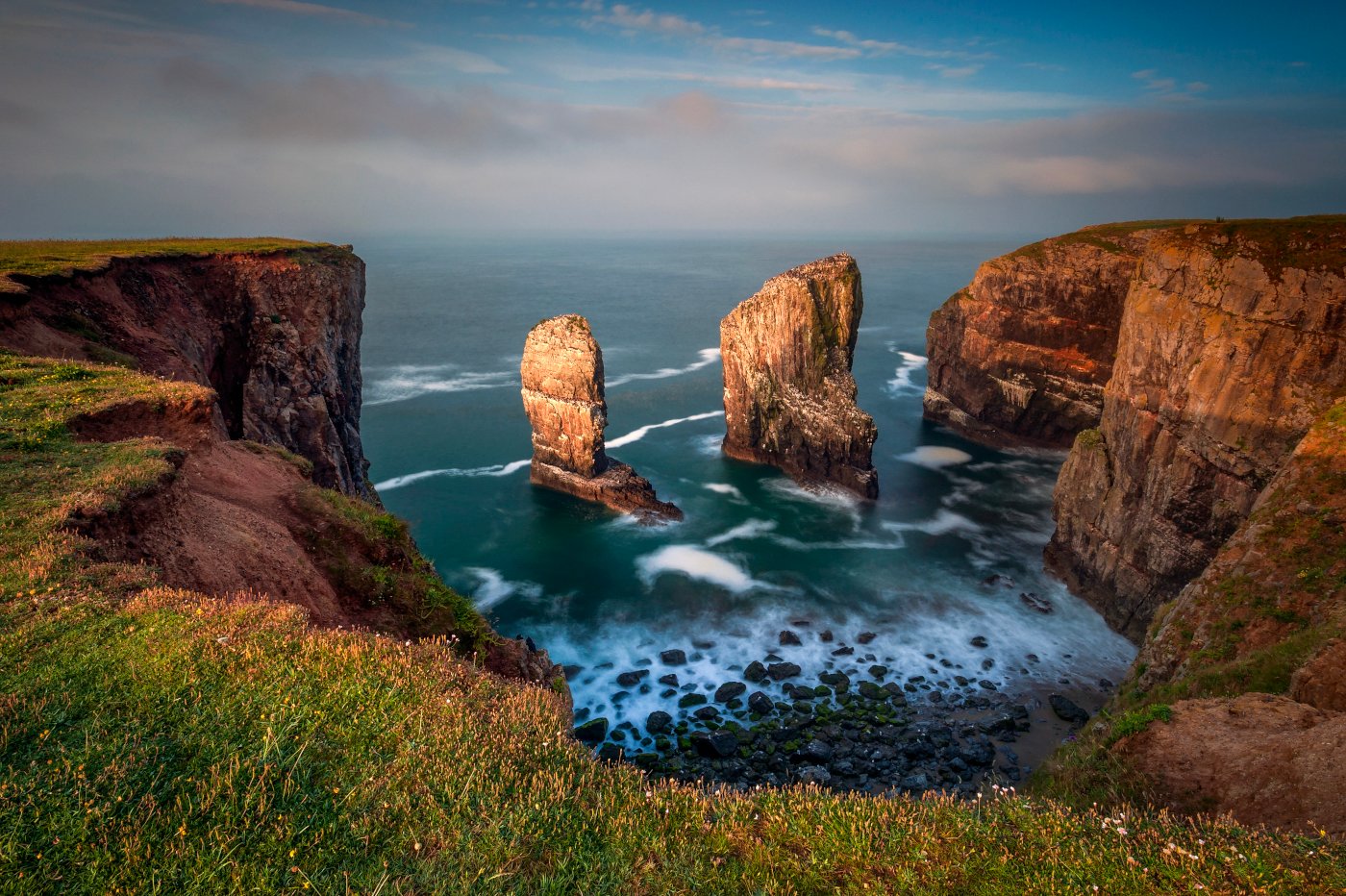
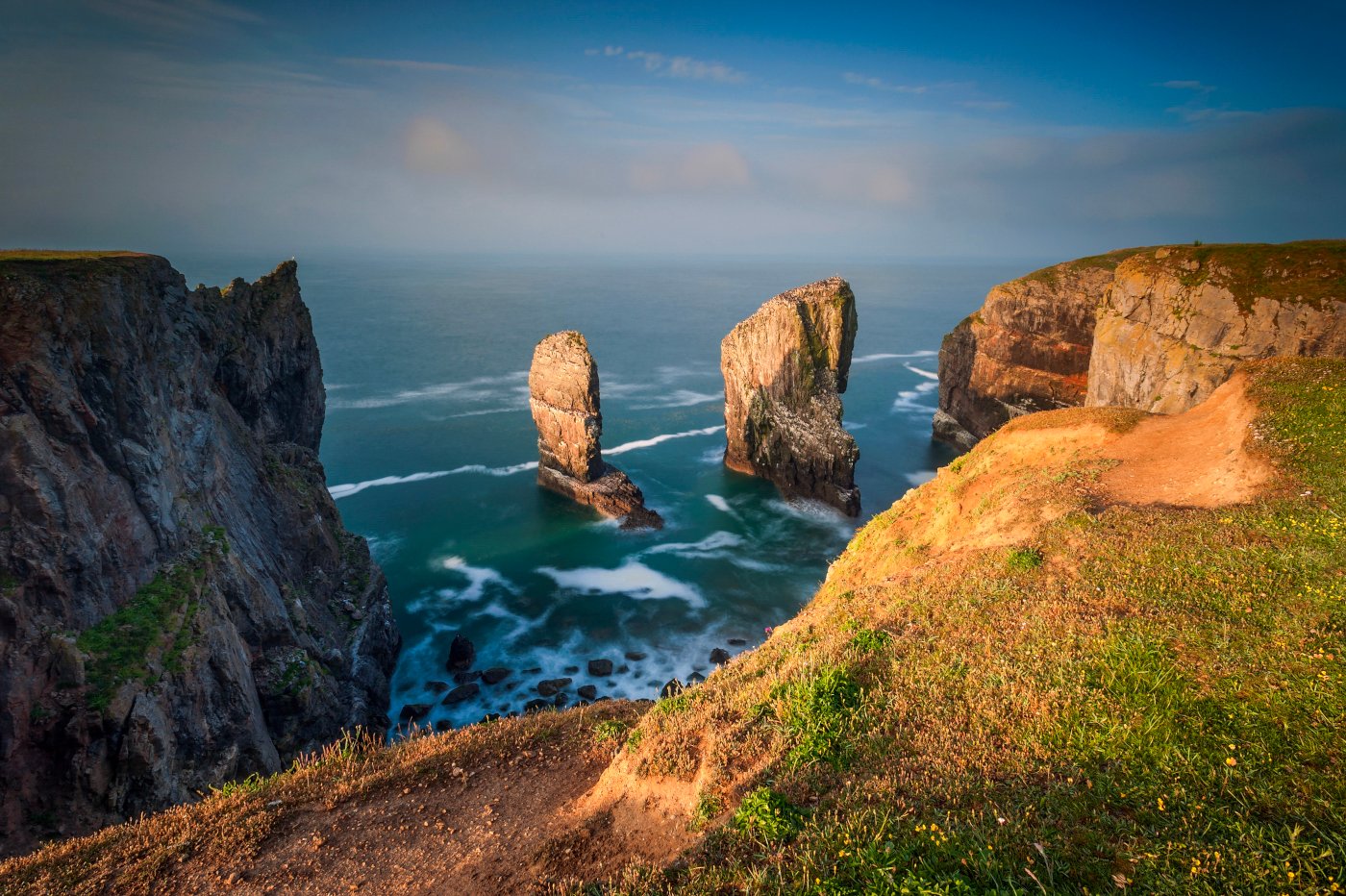
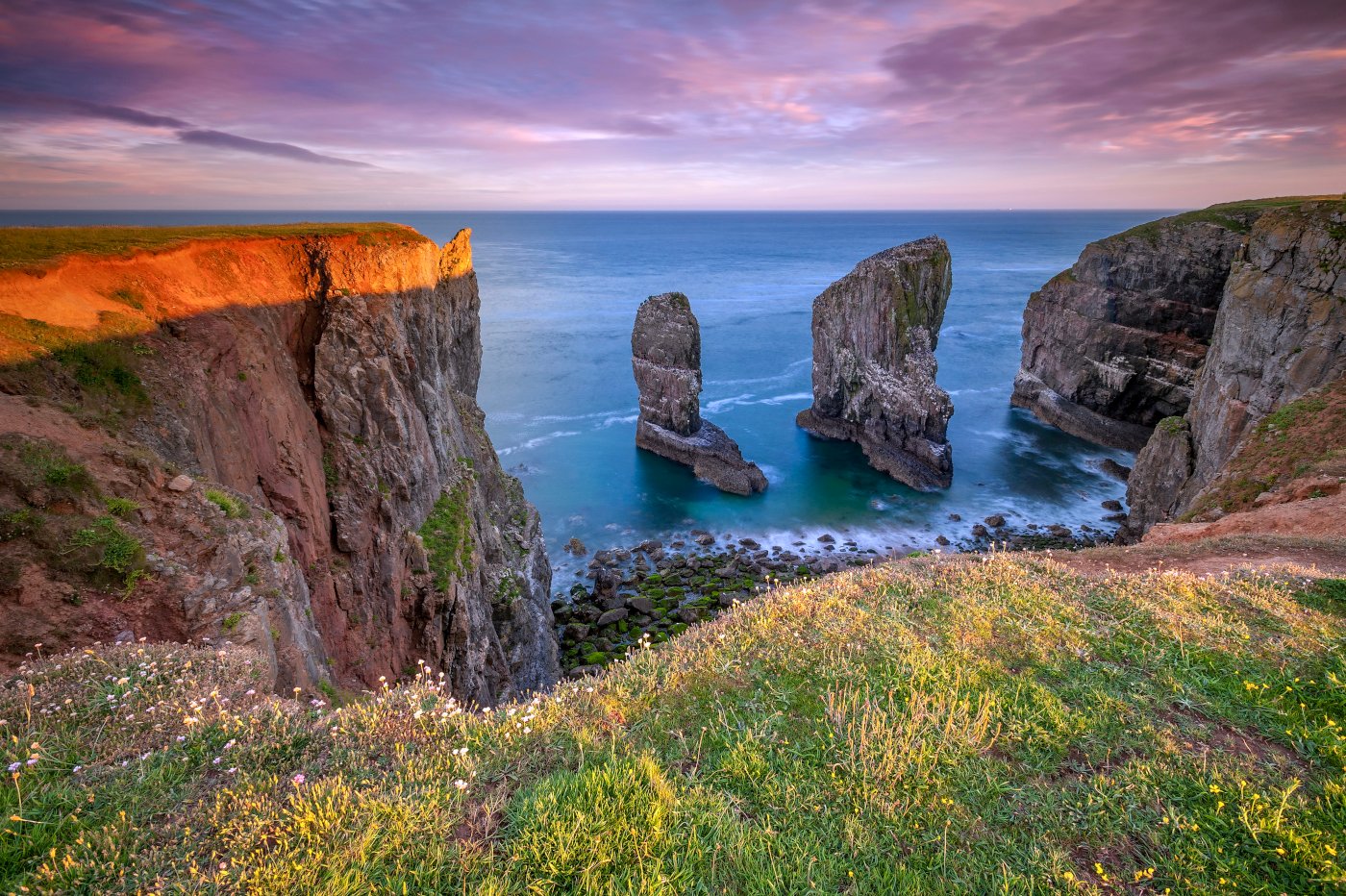
My interest in stack rocks photography grew from studying the tall limestone pillars along this exposed section of the Pembrokeshire coast. The name “Elogug Stacks” should be checked against current local and mapping sources before publication, but the formations themselves provide a clear subject for photography: vertical faces, fractured surfaces and changing sea conditions create distinct compositions throughout the day. Rather than describing them as unmatched elsewhere, I focus on the specific geometry, scale and atmosphere that define this location.

Finding strong compositions around the Stack Rocks sea stacks
Before setting up my camera, I walk along the marked path and compare several safe viewpoints. Lines in the grass, cliff contours and the edge of a beach can lead the eye towards the sea, while the stacks provide a stable visual anchor. I never step beyond protected viewpoints or approach an unstable edge for a better frame. The best spot is the one that offers a strong composition without putting people, wildlife or the landscape at risk.
- Use a secure, elevated viewpoint to show the height of the cliffs while staying well back from the edge.
- Follow the natural curves of the coast to frame the pillars, beach or open water without crowding the subject.
- Test a lower viewpoint only from stable ground, keeping the camera and tripod clear of waves and slippery rock.
Rock pillar photography in changing coastal light
The quality of light in Pembrokeshire can change quickly, which is important for rock pillar photography Pembrokeshire enthusiasts to understand. I look for soft morning light, late-afternoon illumination or broken cloud that reveals detail without flattening the limestone. A clear day can produce strong definition, while hazier conditions may separate the stacks from the distant horizon and give the scenery a quieter character.
Returning at different times of day allows me to compare the direction and colour of the light. Near sunrise, cooler tones can outline the pillars before the sun reaches their faces. Later, low light may stretch shadows across the stone and reveal textures that are less visible at midday. I allow several minutes to watch the scene rather than firing the shutter as soon as I arrive, because the most useful change may be in the clouds, tide or waves.
Using scale, texture and negative space in coastal rock formation photos
I use the relationship between the rock structures and the open sea to communicate scale. A distant figure may provide a sense of proportion, but I do not place people in the frame or ask anyone to move near a dangerous area simply for visual effect. In other compositions, empty water and sky create negative space around the stacks, allowing the viewer to consider their isolation.
Texture is equally important in my coastal rock formation photos. Salt spray, rain and wind have marked the limestone over many years, leaving cracks, ledges and varied surfaces that respond differently to light. A telephoto lens can isolate one face or pillar from the wider locations, while a wider lens can connect foreground detail with the full coastal view. I choose the focal length according to the scene rather than forcing every image into the same format.
Balancing foreground detail with the open Atlantic horizon
Foreground control helps establish where the viewer is standing. I look for stable grass, a textured but safe section of ground or a natural line in the path to lead towards the horizon. A wide-angle lens can include the foreground and the Atlantic in one frame, but I check the edges carefully for distractions and avoid placing the camera close to an unprotected cliff edge. If the foreground is weak, I use a longer lens to simplify the composition instead of moving into a hazardous position.
This approach creates an immersive image while keeping the viewpoint honest and responsible. The Green Bridge may appear in wider coastal views, but Stack Rocks remain the main subject here. I also respect any local notices, access restrictions and the Castlemartin firing range arrangements before visiting. Official guidance should take priority over a planned photograph, particularly when paths are closed or conditions deteriorate.
Capturing spray, tides and movement without losing clarity
The movement of the ocean contrasts with the stillness of the pillars. I watch the tide and wave pattern before choosing a shutter speed, allowing several waves to pass so I can anticipate where spray will rise. A faster setting can retain the shape of individual breakers; a slower setting can soften water movement when the camera is firmly supported. I keep equipment away from the wash line and never remain on an isolated beach or rock platform when the tide is returning.
For clear files, I protect the front element from salt spray, check focus after changing viewpoints and use a tripod only where the ground is stable and permitted. Wildlife also forms part of the landscape, so I keep to the path, avoid nesting areas and do not disturb birds for a closer view. If you would like to discuss my techniques or the available collection of coastal images, please contact me, Tomasz Janicki, at 07545156099 regarding prints or photographic commissions.
The Green Bridge of Wales images shaped by light, weather and tide
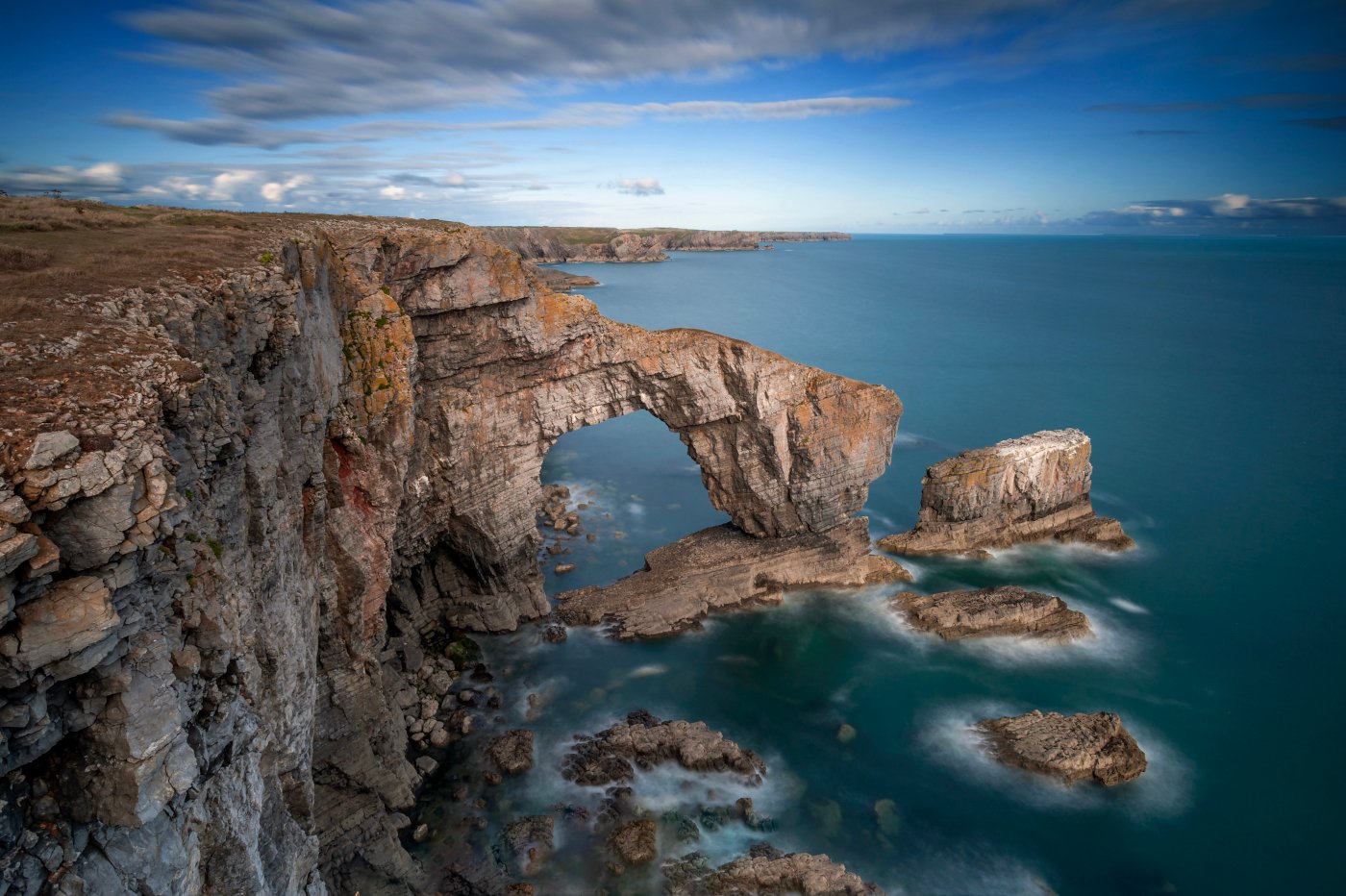
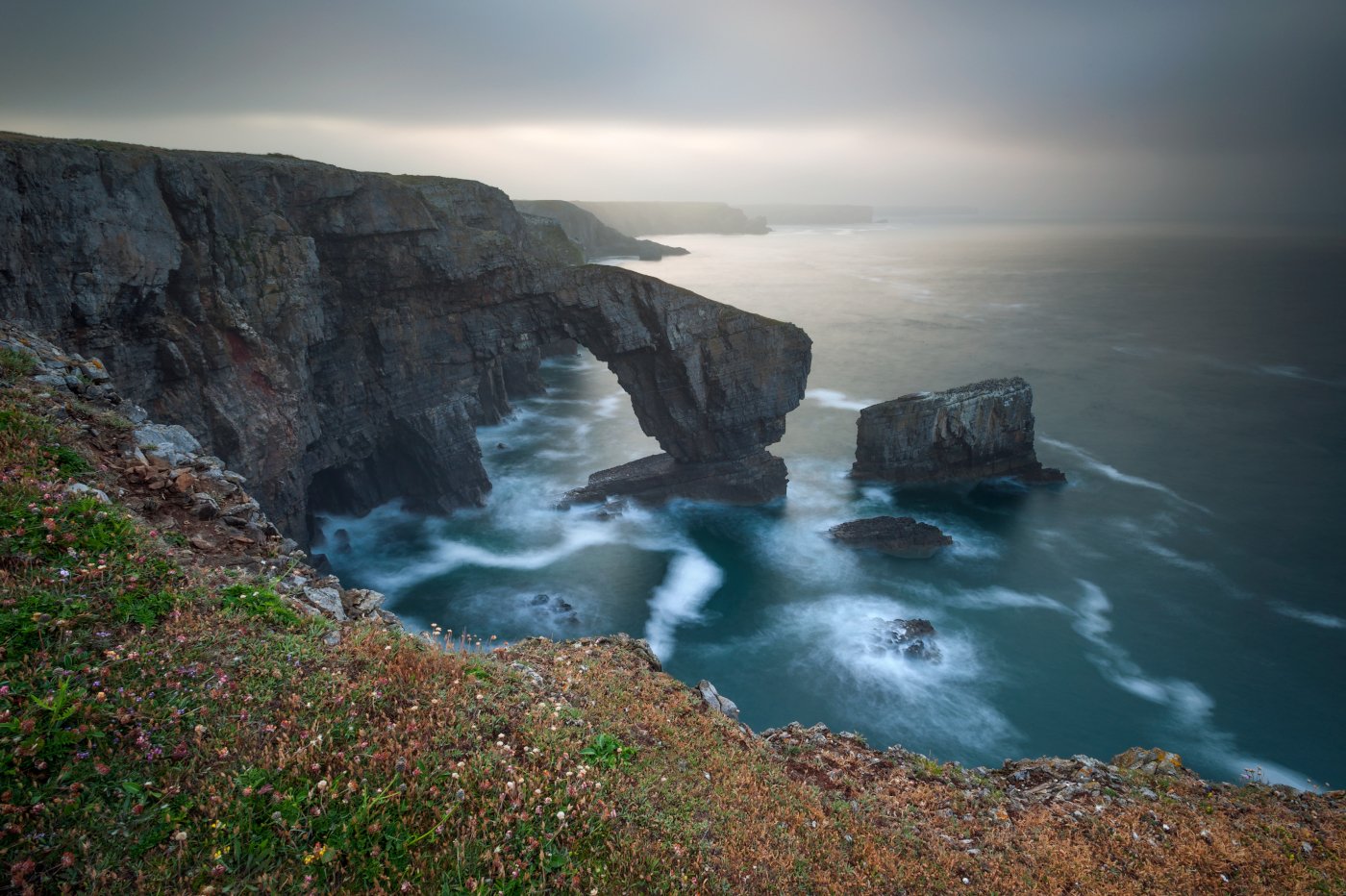
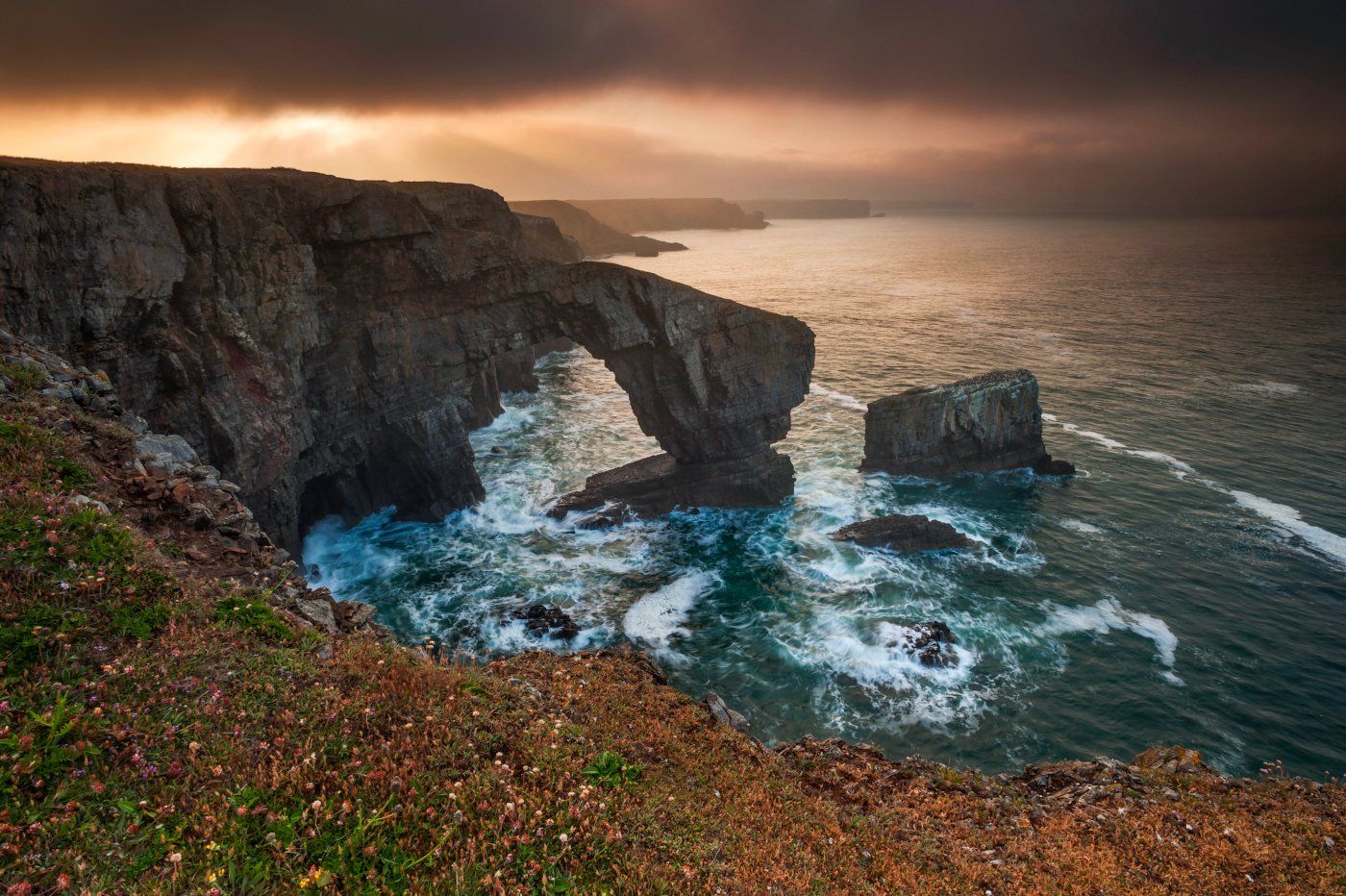
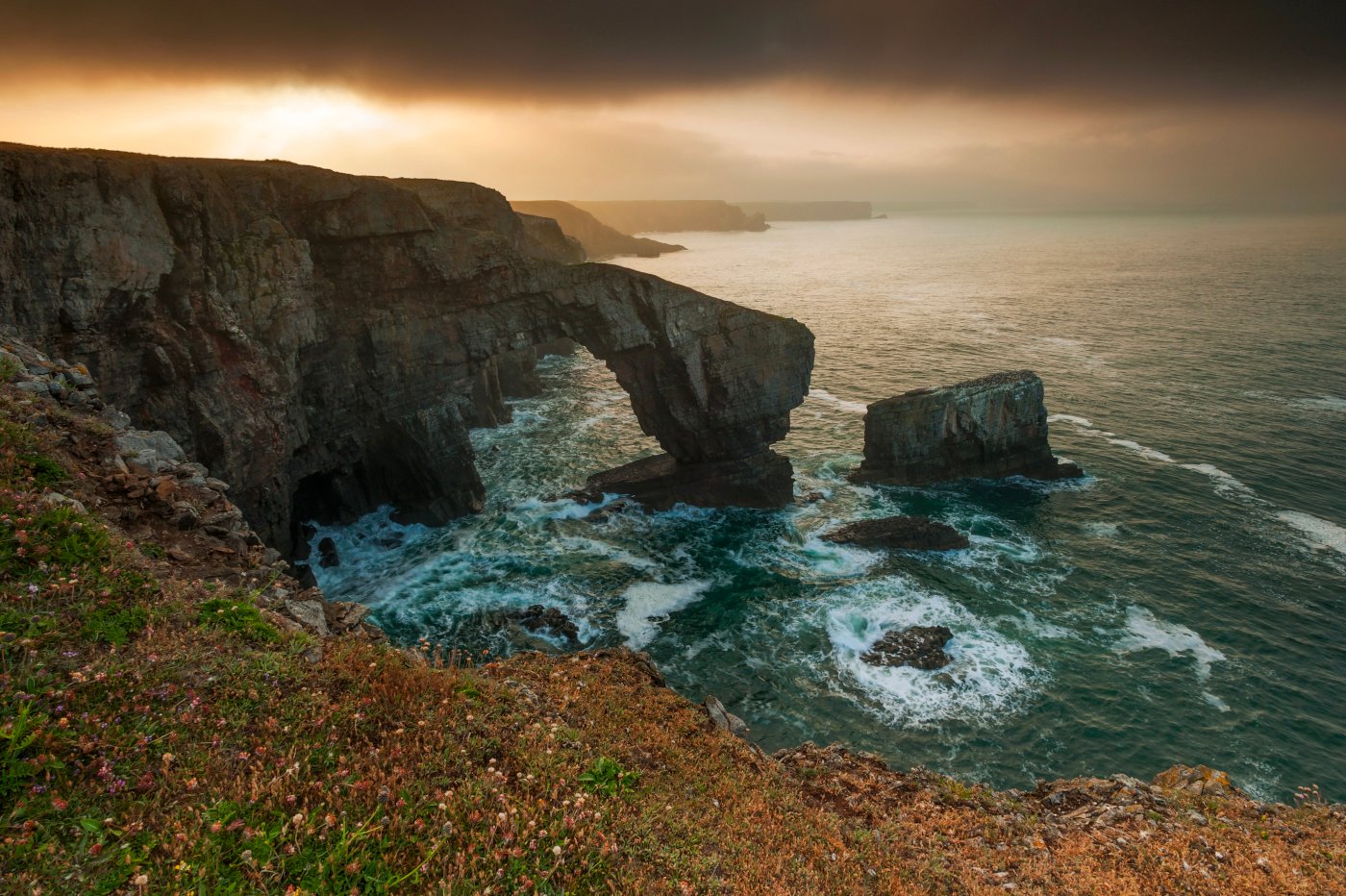
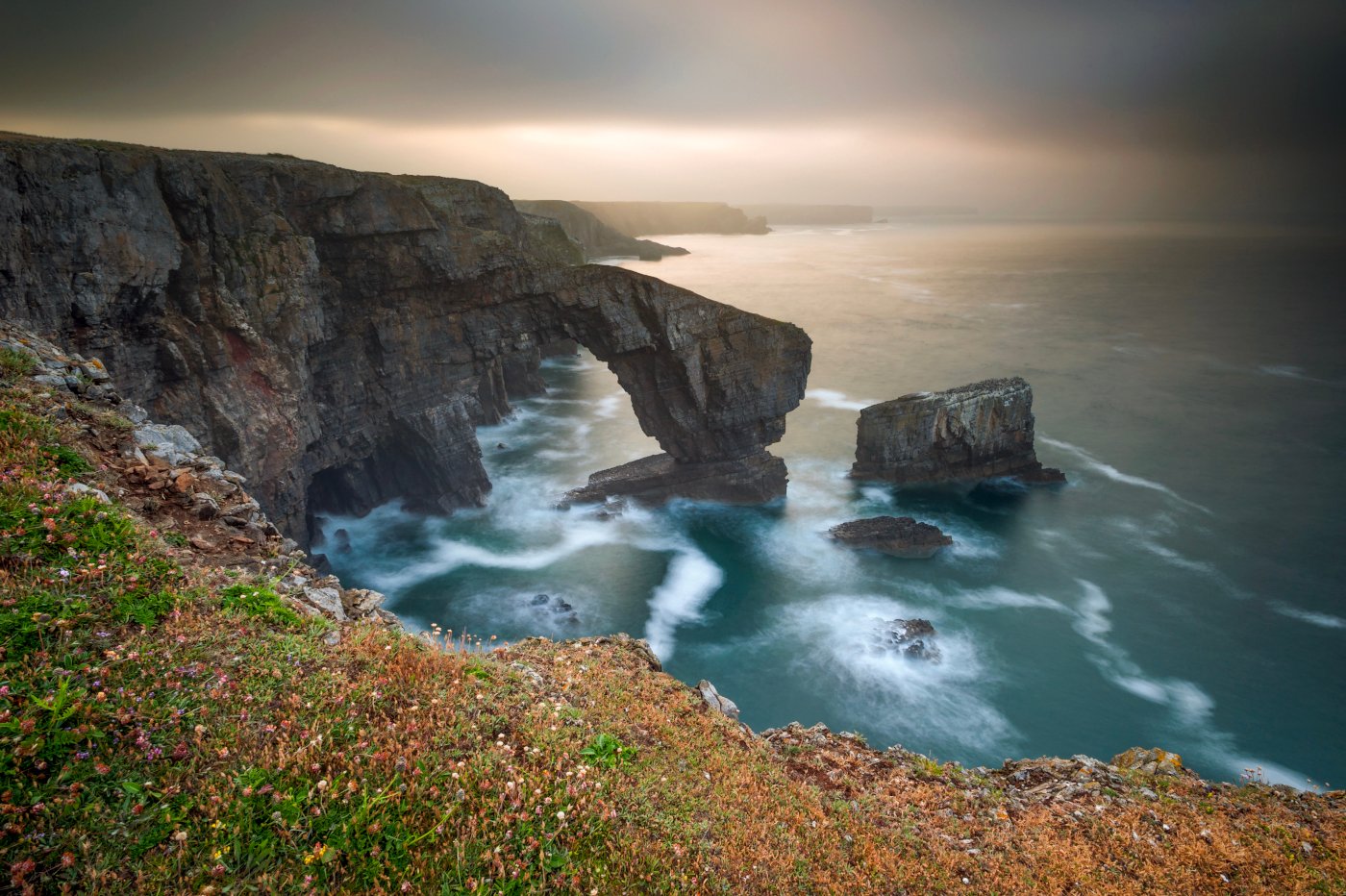
The natural arch known as the Green Bridge of Wales is one of the defining subjects of my coastal landscape photography. Its limestone span, open sea and exposed position create a different composition with every visit. To make considered Green Bridge of Wales photos, I study the tide, cloud, visibility and direction of the light rather than relying on a single forecast or viewpoint. The landmark lies within a protected coastal environment, so access, official notices and the condition of the path should always be checked before a trip.
Photographing the natural arch from distinctive viewpoints
I spend time observing the arch from approved viewpoints along the coastal path before choosing a spot for the camera. Moving a short distance along the path can alter the relationship between the arch, horizon and beach, while a change in height can make the opening appear broader or narrower. These rock arch Pembrokeshire photos work best when the frame shows the structure in context rather than isolating it without scale. I keep well away from unprotected edges, remain on stable ground and never enter a closed area for a better view.
The tide also affects what appears in the lower part of the frame. At one stage, waves may fill the arch opening; later, a darker band of wet rock or a strip of beach may become visible. I watch the water for a while before setting up and leave enough time to retreat safely. The best viewpoint is not necessarily the closest one: a more distant position can give a clearer silhouette and a safer way to include the coast, sea and changing sky.
How changing weather reveals the character of the rock arch
Weather changes the visual structure of the Green Bridge of Wales. Mist or sea haze can reduce distant detail and draw the eye towards the pale limestone, while clear conditions can reveal fissures, ledges and the full contrast between the arch and the water. Broken cloud may create alternating bands of shade and light across the rock. Rain can deepen the colour of the ground and beach, but it also makes the path slippery and can reduce visibility, so personal safety takes priority over the photograph.
I also consider the wider landscape when checking a forecast. A distant headland, lighthouse or church may appear in a broad coastal view, but I do not assume that either landmark is visible from every viewpoint. Their inclusion depends on direction, visibility and the chosen lens. The same applies to the wider history of the coast: the image should communicate the physical character of the place without making unsupported claims about features outside the frame.
Creating memorable Green Bridge of Wales photos in soft and directional light
Light is central to my work on the Green Bridge of Wales images. I compare the angle of the sun with the position of the arch, the colour of the sea and the detail visible inside the opening. Around sunrise, cooler tones and low contrast can give the rock a quiet outline, particularly when thin cloud is present. Around sunset, warmer light may catch the outer face of the arch and lengthen shadows across the surrounding landscape. Neither period is universally best; the result depends on the season, cloud, tide and visibility on the day.
Working with overcast skies for atmospheric coastal images
Overcast light reduces harsh highlights and can make subtle limestone texture easier to record. It is useful when I want an even exposure across the sky, rock and beach, although the scene may need a longer tonal range in post-production. I use the camera’s position and the shape of the arch to guide the eye, keeping the composition simple when the scenery is subdued. If visibility is poor, I avoid travelling close to the edge and choose a later visit instead.
Using warm evening light to emphasise the arch’s structure
When the sun lowers towards the horizon, warm light can emphasise the relief of the stone and create long, defined shadows. This can be an effective time for sunset coastal scenery Wales, provided the route remains open and there is enough daylight to leave safely. I may stay briefly after sunset to record cooler tones in the sky, but I do not compromise on visibility or the returning tide. If you would like to enquire about a print from this collection or discuss a specific commission, please contact me, Tomasz Janicki, at 07545156099.
Planning a Pembrokeshire coast photography session
My process for documenting the exposed Pembrokeshire cliffs begins well before I pack my bag. Creating dramatic Wales coast images means understanding the Atlantic environment, checking access information and allowing enough time to work safely. I plan around the coastal path, the forecast, the tide and the position of the sun, while accepting that conditions may change before or during a visit. A promising composition is never more important than staying on an authorised route and away from an unprotected edge.
Choosing the right time for Stack Rocks sunset photography
Timing matters when I am planning high-quality Stack Rocks sunset photography. I aim to arrive early enough to walk from the permitted access point, read the ground and compare viewpoints, but the exact arrival time depends on the route, season and access guidance. I do not treat two hours as a universal rule. I allow additional time when the path is unfamiliar, the weather is unsettled or I need to find a safe position before the light changes.
The low light at the end of the day can reveal texture in the limestone and turn a familiar coastal view into something new.
Sunset can provide warm, directional light that emphasises the faces of the stacks and creates longer shadows across the rock. I also consider sunrise, when cooler tones, quieter conditions and low-angle light may separate the pillars from the sky. Both periods require preparation: sunrise means travelling in darkness or low light, while sunset requires enough remaining visibility to leave safely. I may work briefly into the blue hour, but only when the route, weather and tide allow a safe return.
Reading tide, wind and cloud conditions before travelling
Before setting off, I check official access notices, a reliable weather forecast and current tide information for the relevant area. I also confirm whether any local restrictions affect the coastal path or nearby land, including arrangements connected with the Castlemartin firing range. A tide table is a planning aid rather than a guarantee of safe conditions: waves can reach further than expected, and a beach or rock platform can become inaccessible as the water rises.
Wind speed influences both comfort and camera stability. Strong gusts may make a tripod difficult to use and can carry salt spray across the lens, while rain can make the path and grass slippery. Cloud can soften the light, reduce contrast or create short periods of illumination across the cliffs. If visibility, wind or the returning tide makes the planned viewpoint unsafe, I change the composition, move inland or postpone the visit. Protecting people and wildlife is always part of successful photography.
Essential camera, lens and tripod choices for the Pembrokeshire cliffs
I take a sturdy tripod when the ground is stable and its use is appropriate, but I do not place it close to an edge or in the way of other path users. A wide-angle lens can show the relationship between the foreground, stacks, beach and open sea, while a telephoto lens helps isolate a pillar or a changing patch of light. I carry spare batteries, memory cards, a lens cloth and basic protection against rain and spray. The right equipment is the equipment that can be used safely in the conditions on the day.
Long-exposure techniques for water and moving cloud
To soften water movement, I may use a neutral-density filter and a longer shutter speed. The result depends on the wave pattern, wind, available light and the stability of the camera; it will not always create a silky effect. A faster exposure can preserve spray and the shape of individual breakers, whereas a longer exposure can simplify restless water and moving cloud. I take several frames and review the detail before changing position, keeping all equipment well back from the wash line.
Practical clothing and equipment for exposed coastal locations
The Pembrokeshire coast is exposed, so I wear layered, waterproof clothing and sturdy walking boots with reliable grip. I carry water, a charged phone, a head torch for early or late sessions and a small first-aid kit. A microfibre cloth helps remove salt spray from the lens, but I avoid wiping grit across the glass and keep the camera protected when rain increases. I check the route before leaving and tell someone where I intend to work if I am travelling alone.
Respecting the cliffs, wildlife and protected coastal landscape
I follow a leave-no-trace approach and stay on marked paths wherever possible. I avoid nesting birds, fragile vegetation and fenced or closed areas, and I never cross a barrier to make the foreground more prominent. The cliffs, beach and sea are habitats as well as photographic subjects; giving wildlife space protects the landscape and improves the experience for everyone. Official notices and local guidance take priority over any planned image.
If you have questions about my approach or wish to discuss my work, please feel free to contact me. You can reach me, Tomasz Janicki, on 07545156099 for enquiries regarding my dramatic Wales coast images or to discuss specific Pembrokeshire sunset images for your collection.
From dramatic Wales coast images to fine art prints
The journey from a carefully planned coastal photograph to a finished print involves more than pressing the shutter. I select images from locations such as Stack Rocks and the Green Bridge, then consider how the original light, colour and detail will translate onto paper or another display surface. Subject to availability, my Pembrokeshire Coast fine art prints are prepared to preserve the atmosphere of the landscape without losing the texture of the cliffs, sea and beach.
Selecting photographs for Pembrokeshire coastal prints
Not every image from a visit becomes part of the collection. I review each frame for composition, focus, tonal range and the way it communicates a sense of place. The final list may include wide views of the coast, close studies of weathered rock and quieter scenes in which changing light defines the landscape. I also check the file at the intended print size so that important details remain clear rather than selecting an image only because it looks strong on a small screen.
Fine art photography of the Pembrokeshire coast for homes and collections
Displaying fine art photography Pembrokeshire coast can bring the atmosphere of the sea and open landscape into a home, office or personal collection. A broad coastal view may suit a larger wall, while a more intimate photograph can work in a smaller room or as part of a group of images. I can discuss the available sizes, orientation and display context so that the chosen piece feels appropriate for its intended place, rather than encouraging a purchase without first considering the space.
Available subjects, including Elogug Stacks fine art prints and The Green Bridge
Depending on the current collection, subjects may include the Stack Rocks pillars, the natural arch known as the Green Bridge and other views from the south-west Pembrokeshire coast. The spelling and official use of “Elogug Stacks” should be confirmed against reliable local sources before it is used in a product title. Where available, an Elogug Stacks fine art print can show the relationship between the rock formations, water and sky, while a Green Bridge image may emphasise the opening, limestone structure or surrounding beach. I describe each photograph accurately so that buyers understand what and where they are choosing.
Choosing between coastal wall art and photography prints of Wales coastline
When choosing between photography prints of Wales coastline, consider the room, viewing distance and the mood you want the image to create. A matte or textured paper can reduce reflections and suit a quieter interior, while an aluminium mount may provide a clean, contemporary appearance. Canvas can give a softer, more tactile finish. Exact sizes, substrates, framing, delivery options and availability should be confirmed for each order, as these details can vary between photographs and suppliers.
Preparing a print to preserve detail, colour and atmosphere
I check the file, crop and tonal balance before sending an order to the selected professional laboratory. Colour management helps the printed result remain close to the calibrated digital file, although the appearance can vary according to the paper, substrate and viewing light. I also consider how fine details in a church, distant headland or shoreline will reproduce at the chosen scale. Information about paper type, protective finishes, framing, dispatch and care should be provided with the individual print rather than assumed for every product.
| Print TypeBest ForFinish | ||
| Fine Art Giclée | Gallery Displays | Matte/Textured |
| Aluminium Mount | Modern Offices | High Gloss |
| Canvas Wrap | Living Spaces | Satin |
The formats shown above are a guide and should be checked against the current product range before ordering. For one clear print enquiry, please contact Tomasz Janicki at 07545156099 with the subject, preferred size, display format and delivery requirements you are considering for your coastal print.
Why collectors choose my Wales landscape photography
People choose my images because they want a considered view of the Welsh coast rather than a generic travel snapshot. I spend time returning to the same locations in different weather, observing how the landscape changes from one day to the next. This patient approach helps me create photographs that reflect the character of the place, from quiet beaches and sea horizons to the rock formations around Stack Rocks and the Green Bridge of Wales.
My preference for authentic, carefully composed coastal images
I begin by observing the scene before choosing a viewpoint, focal length and camera position. Years of walking the coastal paths have taught me to look for safe, natural lines that lead the eye through the frame without disturbing the environment. I may use a foreground rock, a curve in the path or open space around the subject to establish scale. The aim is not to add unnecessary effects, but to create a balanced composition that allows the landscape to communicate its own atmosphere.
Photography for sale featuring Pembrokeshire sunset images and sea stacks
My collection includes photographs made in changing light across the Pembrokeshire shoreline. I return at sunrise and sunset when conditions allow, because low light can reveal different textures and colours in the cliffs, beach and sea stacks. A fine art print stack rocks may suit someone looking for a strong geological subject for the home, while Pembrokeshire sunset images offer softer colour and longer shadows. The available pembrokeshire photography for sale should be checked for current subjects, formats, sizes and delivery options.
How my work reflects scenic southwest Wales photography
My portfolio is rooted in the geography and changing conditions of the region. I create scenic southwest wales photography by combining careful timing with close attention to the relationship between the cliffs, tide, light and open water. Each image begins with a specific observation made on location, whether that is a distant view across the coast or a detailed study of weathered rock. I aim for prints that preserve the atmosphere of the moment without making unsupported claims about the landscape or its history.
Enquiring about Pembrokeshire photography for sale and commissions
If you would like a guide to the available images, please contact me, Tomasz Janicki, on 07545156099 and mention the subject or location that interests you. For a print enquiry, I can discuss current sizes, finishes and display options for pembrokeshire photography for sale. For a separate commission, please describe the intended project, space and preferred subject so that we can discuss a suitable brief and timescale.
Conclusion
Stack Rocks and the Green Bridge remain rewarding subjects for coastal photography because their appearance changes with the tide, weather and available light. From a safe viewpoint, the same area can offer wide views across the sea, detailed studies of weathered rock or a quieter composition that includes the beach and surrounding landscape. Returning at sunrise and sunset gives me different ways to show the character of this part of the Pembrokeshire coast.
Careful planning is central to the process. Before each trip, I consider the time of day, access information, the tide and the condition of the paths. Local restrictions, including notices connected with the Castlemartin firing range, must be followed, and no photograph is worth approaching an unsafe edge or disturbing the protected landscape. These practical decisions help me create considered images that reflect the place rather than forcing a composition.
To view available fine art prints or request information about a specific image from Stack Rocks, the Green Bridge or the surrounding coast, please contact Tomasz Janicki on 07545156099. I can discuss current print options and bespoke photography commissions for your home or collection.
FAQ
What makes the Castlemartin area suitable for coastal photography?
Castlemartin offers exposed cliffs, open sea and distinctive rock formations. I look for a safe spot where the changing light places the coast in context. Access, tide and firing-range notices must be checked before a visit. Pentre Ifan, Strumble Head and Carew Castle are separate Pembrokeshire locations, each offering a different subject and history.
Why is Stack Rocks an important subject in your portfolio?
Stack Rocks provides a clear study of scale, texture and space. I use the foreground, horizon and sea to guide the eye without approaching an unsafe edge. The best way to work is to remain on the permitted path and give wildlife room. Pentre Ifan, with its burial chamber, offers a contrasting subject rather than an alternative view of the stacks.
How do you photograph the Green Bridge of Wales?
For Green Bridge of Wales images, I compare viewpoints, visibility and tide before setting up. Sunrise can provide cooler tones, while sunset may add warmer colour to the limestone. Weather changes quickly, so I choose a safe location and do not claim that one time is always best. Strumble Head, including its lighthouse, is another location where changing weather shapes the landscape.
When should I plan Stack Rocks sunset photography?
There is no universal best day or time. Golden-hour light may emphasise the rock, but cloud, wind and tide can change the result. I check conditions before a trip and allow enough daylight to leave safely. Strumble Head and Carew Castle can also suit different light, while Pentre Ifan is particularly sensitive to the direction of the sun. A guide should never replace official access advice.
Do you offer Pembrokeshire fine art prints?
Subject to availability, I offer fine art photography of the Pembrokeshire coast, including Stack Rocks and the Green Bridge. Prints may show a beach, open water or a wider landscape view. Available sizes, substrates and finishes should be confirmed for each order. My collection may also include Pentre Ifan, its burial chamber, Carew Castle and Strumble Head. Please contact Tomasz Janicki on 07545156099 for current options.
Why choose this Wales landscape photography for a collection?
My approach is based on returning to each place, allowing time to observe the light, tide and weather rather than taking a quick snapshot. I aim to make carefully composed images that respect the coast and its history. Carew Castle, its church and Strumble Head show the variety of Pembrokeshire subjects, while Pentre Ifan and its burial chamber connect the landscape with earlier human life. Current prints and commissions can be discussed with the photographer by telephone.
Follow us on Instagram: MountainsLP
Follow us on Twitter: MountainsLP
Follow us on LinkedIn: MountainsLP


